SEIM REAP - 03 DAYS / 2 NIGHTS STUDY TRIP $111.1
Include : Transportation, 7 meals, first aids, Tour guide, Photographer, Accommodation. Drinking Water.
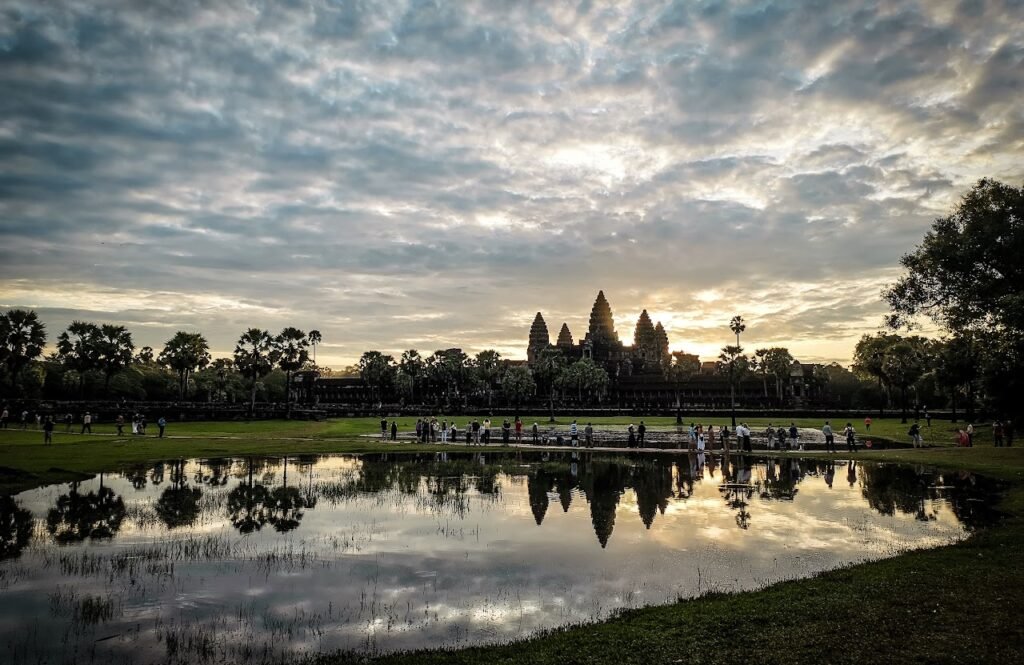
01. Angkor Wat Temple
The biggest religious structure in the world, Angkor Wat is a complex of temples in Cambodia that spans 162.6 hectares (1,626,000 m2; 402 acres). It was initially built by King Suryavarman II as a Hindu temple dedicated to the deity Vishnu for the Khmer Empire, but as time went on, it eventually changed into a Buddhist temple, earning it the moniker “Hindu-Buddhist” temple.
Angkor Wat is about 5.5 kilometers (3+1⁄2 mi) north of Siem Reap, Cambodia’s contemporary capital, and a short distance south and slightly east of Baphuon, the site of the former capital. It is the southernmost of Angkor’s principal sites, located in a region of Cambodia where there is a significant collection of ancient buildings.
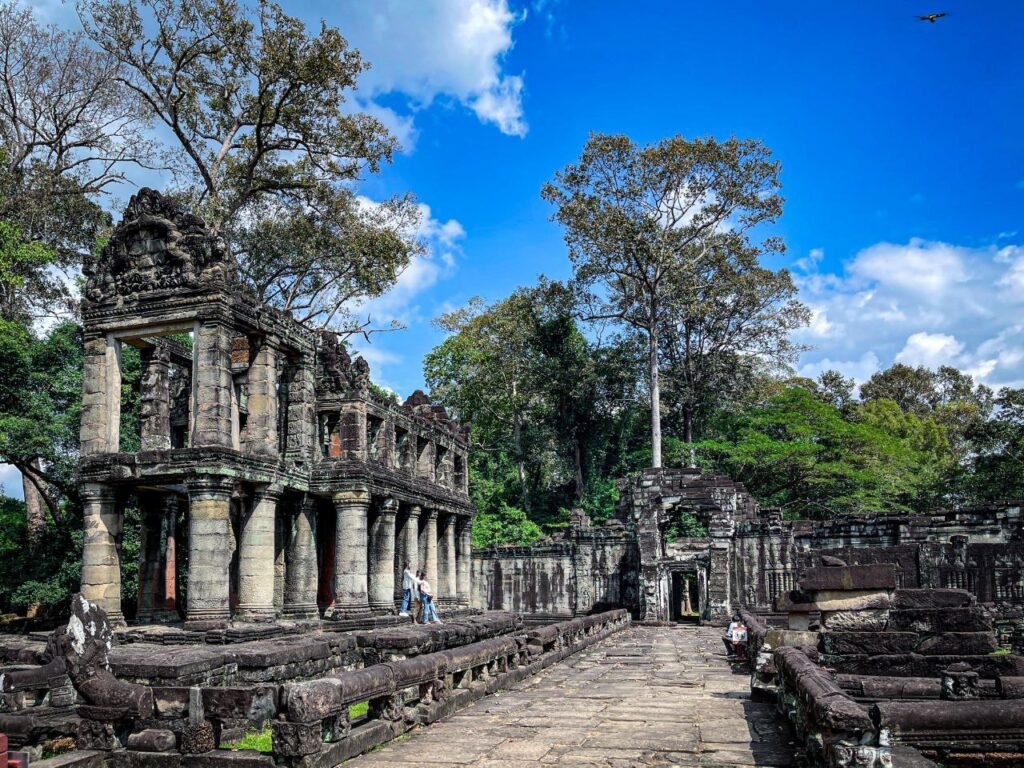
02. Preah Khan Temple
A temple named Preah Khan (Royal Sword) was constructed in the 12th century in Angkor, Cambodia, for King Jayavarman VII as a memorial to his father. [1]: 383–384, 389 [2]: 174–176 Just west of the Jayatataka baray, with which it was once linked, it is situated northeast of Angkor Thom. With about 100,000 employees, it served as the administrative hub for a sizable organization. The temple has a simple flat design with a fundamental layout of succeeding rectangular galleries encircling a Buddhist sanctuary that is complicated by Hindu satellite temples and numerous later expansions. Preah Khan has been mostly kept undisturbed, much like the nearby Ta Prohm, with a variety of trees and other plants flourishing among the ruins.
03. Knong Sompov Waterfall
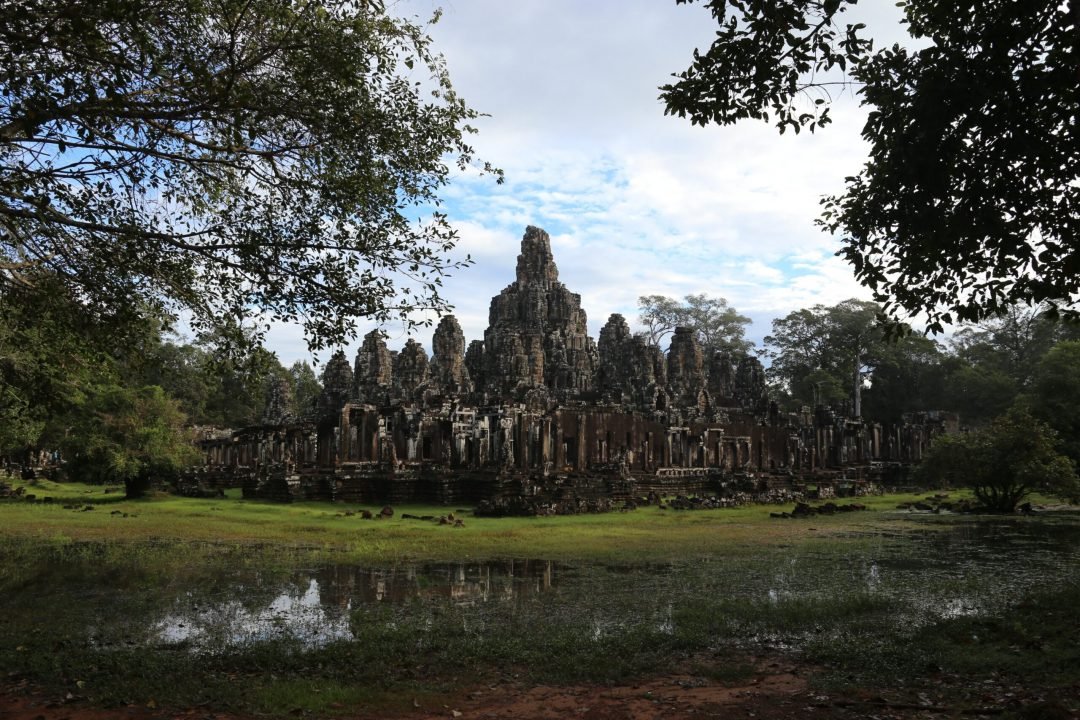
At Angkor in Cambodia, there is a Buddhist temple called The Bayon that is ornately ornamented. The Bayon is located in the heart of Jayavarman’s city, Angkor Thom, and was constructed in the late 12th or early 13th century as the state temple of the King Jayavarman VII.
The towers that protrude from the upper terrace and congregate around the Bayon’s central peak are what give it its most recognizable appearance: a plethora of tranquil, beaming stone faces. In contrast to the classical style of Angkor Wat, the principal conservancy organization, the Japanese Government Team for the Safeguarding of Angkor, has called the temple “the most stunning manifestation of the baroque style” of Khmer architecture.
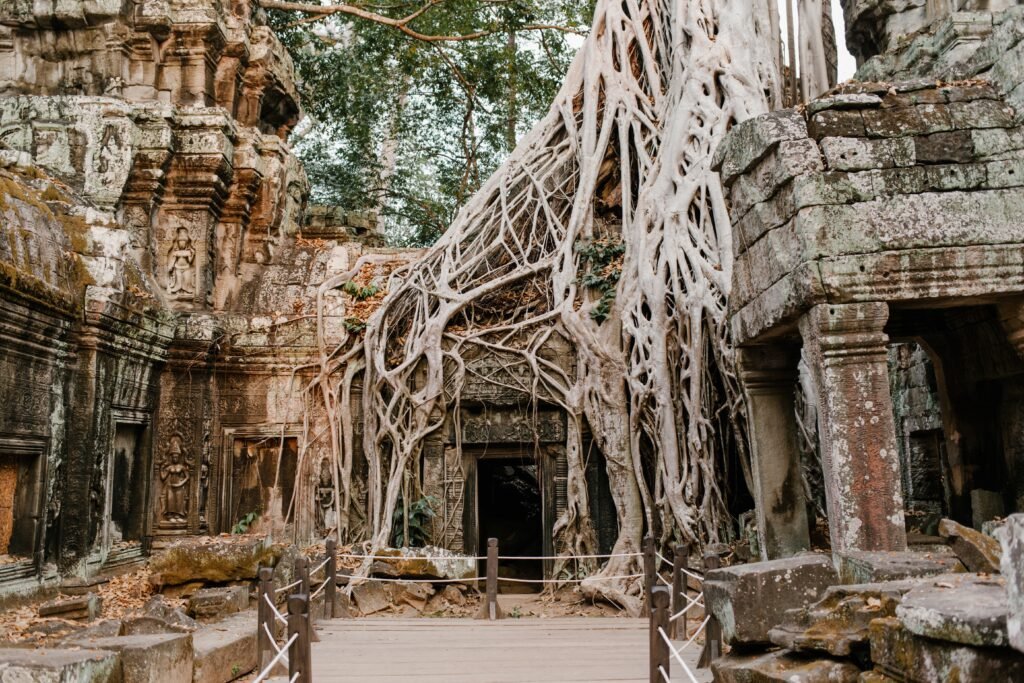
04. Ta Prohm
The temple in Siem Reap, Cambodia, known now as Ta Prohm was originally known as Rajavihara and was constructed mostly in the late 12th and early 13th centuries in the Bayon style. It was established by the Khmer King Jayavarman VII as a Mahayana Buddhist monastery and university, and is situated about one kilometer east of Angkor Thom on the southern side of the East Baray. Ta Prohm is one of the most visited temples in Angkor because it is mostly in the same state as when it was discovered, unlike most Angkorian structures. This is due to the photogenic and atmospheric combination of trees sprouting from the ruins and the surrounding forest.
05. Sunset
In Cambodia’s Siem Reap Province, there is a Hindu and Buddhist temple called Phnom Bakheng that has the shape of a temple mountain. It was constructed around the end of the ninth century, under the rule of King Yasovarman, and is dedicated to Shiva (889-910). Today, it is a well-liked tourist destination for sunset views of the 1.5 km to the southeast, hidden in the jungle, much larger temple Angkor Wat. One of the most endangered Angkorian monuments is Phnom Bakheng due to the high volume of tourists. Together with APSARA, World Monuments Fund has been preserving the temple since 2004.
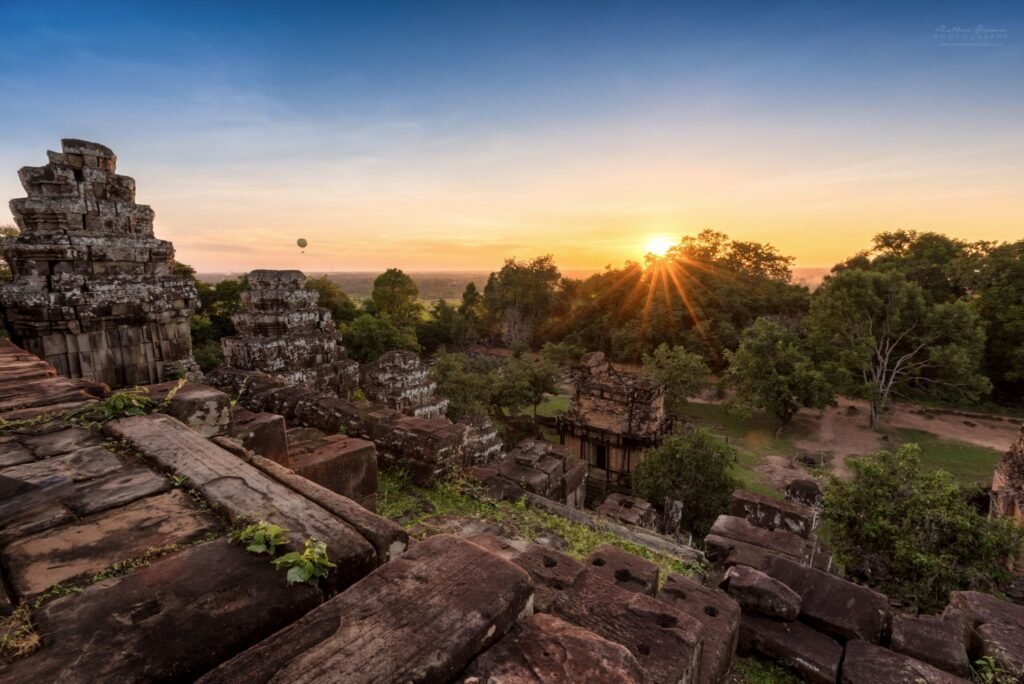
Learnign about Yasodharapura
Yasodharapura, sometimes referred to as Angkor, was founded by King Yasovarman I in the late 9th century and housed the Phnom Bakheng temple. It served as the second capital of the Khmer Empire after Amarendrapura.
The inscriptions allude to Yasodharapura as Phnom Kandal (Central Mountain). Due to Yasovarman’s conviction that the mountain was among the holiest of places to worship the Hindu deities, Phnom Bakheng was built shortly before Yasodharapura. A causeway connected Yashodharapura to a previous capital, Hariharalaya. The Yashodharatataka was a part of the urban complex.
Yasodharapura was the name of the area’s later capital cities. One of these is Angkor Thom, which was built around King Jayavarman VII’s Bayon temple (1181-1218AD).
The Ayutthaya Kingdom’s King U Thong, also known as Ramathibodi I, besieged it in 1352. The following year, the Ayutthaya were successful in conquering the city and installing one of their princes on the king. The Khmer reclaimed it in 1357. In the fifteenth century, King Borommarachathirat II of Ayutthaya invaded and left Angkor Thom.
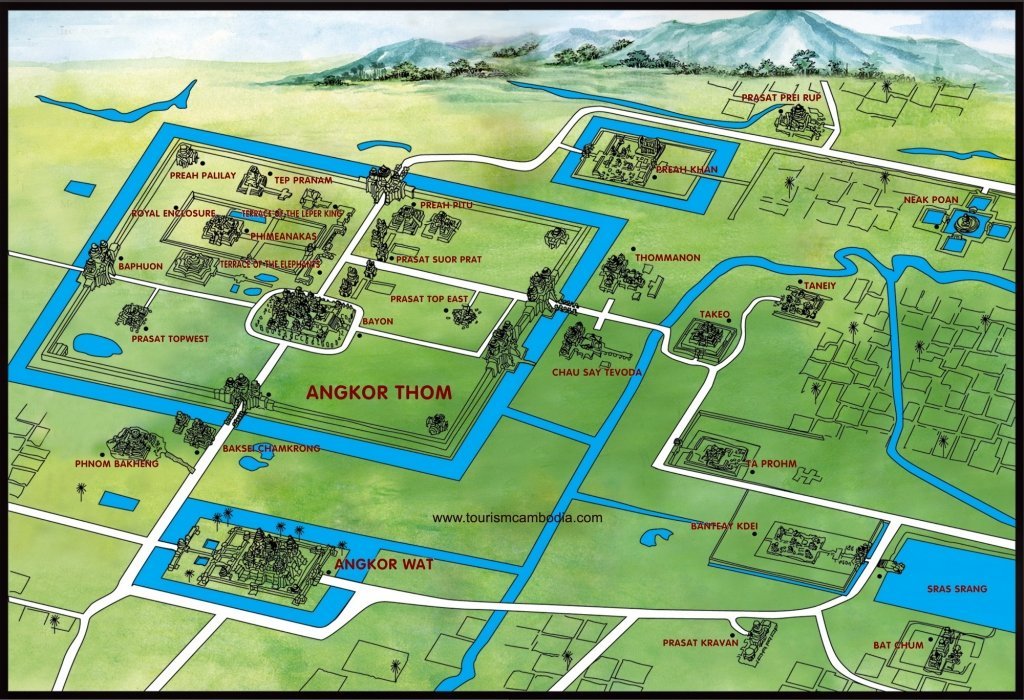
Agendar
DAY 01 ARRIVAL – SIEM REAP – ANGKOR WAT TOUR (no meal)
Upon arrival at Siem Reap airport, meets and transfers to hotel for check in
Lunch not included
Visit to the unique interior brick sculptures of Prasat Kravan, Srah Srang (“The Royal Baths” was once used or ritual bathing), Banteay Kdei (surrounded by 4 concentric walls), Ta Prohm, one of the area’s most beautiful temples. Ta Prohm has been relatively untouched since it was discovered and retains much of its mystery. Neak Pean, a fountain built in the middle of a pool (representing the paradisiacal Himalayan mountain-lake) and Preah Khan temple, Built by the King Jayavarman VII. Preah Khan is, like Ta Prohm, a place of towered enclosures and shoulder hugging corridors. Unlike Ta Prohm, however, the temple of Preah Khan is in a reasonable state of preservation and ongoing restoration efforts should maintain and even improve this situation.
Dinner not included and night at hotel
DAY 02 SIEM REAP – ANGKOR WAT TOURS (B)
Breakfast at hotel
Visit the antique capital of Angkor Thom (12 century): the South Gate with its huge statues depicting the churning of the ocean of milk, the Bayon Temple, unique for its 54 towers decorated with over 200 smiling faces of Avolokitesvara, the Phimeanakas, the Royal Enclosure, the Elephants Terrace and the Terrace of the Leper King. Lunch not included
Visit to the most famous of all the temples on the plain of Angkor: Angkor Wat. The temple complex covers 81 hectares and is comparable in size to the Imperial Palace in Beijing. Its distinctive five towers are emblazoned on the Cambodian flag and the 12th century masterpiece is considered by art historians to be the prime example of classical Khmer art and architecture. Enjoy wonderful sunset from the top of Pre Rup Temple.
Dinner not included and night at hotel
DAY 03 SIEM REAP – BOAT TRIP – DEPARTURE (B)
Breakfast at hotel
In the morning, we will enjoy a boat ride on the Tonle Sap Lake at KAMPONG PHLUK VILLAGE. This is the largest permanent fresh-water lake in South East Asia and flows into Tonle Sap River, joining the Mekong in Phnom Penh. We will see a fishermen’s “floating village” with floating schools, floating police station, etc. It is same as a big village floating on the lake, and the “village” move from place to place following water levels and current. Lunch not included
Transfer to Siem Reap airport for flight to next destination